Years and Years: a chilling look into the near future

In the words of L.P. Hartley – ‘The past is a foreign country: they do things differently there.’

It’s easy, sitting in the present, to think that things will never change. Or, at least, that the changes won’t affect us. What did we think 2019 would look like in 2009? Did we imagine that we would be able to speak to an Alexa speaker who would talk back to us, answering our every question? Did we consider that the UK would no longer be part of the EU? That abortion would be banned in Alabama? That we would live in an increasingly precarious employment climate catalysed by technology? That Donald Trump would be president? That Artificial Intelligence could change the way we live, denouncing the need for work and uprooting the foundations upon which we define ourselves?

Difference is made more frightening when compared to the past, which can seem like a safe place in retrospect; a haven of security. BBC’s latest drama, ‘Years and Years’, zooms in on the lives of an unremarkable Mancunian family. The story begins with Daniel and Ralph, a couple watching Question Time. A woman called Vivienne Rook (Emma Thompson), exclaims on the topic of Israel and Palestine that she ‘doesn’t give a fuck’ about their electricity shortages. The opinion elicits gasps from the live audience, followed by a threat to exclude her from the debate. Rook goes on to explain that she ‘wants her bins to be collected once a week…the primary school two hundred yards from my house to pick up its own litter’. The reaction turns from shock to applause, the crowd smiling and nodding in approval; a star has been born. At home, this new politician divides opinions: Daniel thinks she’s a monster, Ralph thinks she’s brilliant.

Emma Thompson is utterly believable as a polarising political star on the rise; her straight-talking, no-nonsense speeches are impassioned and violent, whilst being eerily reminiscent of Katie Hopkins’s rants. Her language is of the same ilk used by Nigel Farage, designed to play on the fears of the public, of the ‘everyman’ who just wants some stability in a world that never seems to stand still or listen.

Following this scene, we are introduced to parents Celeste (T’Nia Miller) and Stephen (Rory Kinnear), Daniel’s brother. ‘Normal’, middle-class parents. The feisty Edith (Jessica Hynes), Daniel’s sister, has just given birth to a son in the present 2019. On the radio, talks of Brexit negotiations drole on in the background. Just after Edith has given birth, Daniel takes the baby in his arms, and delivers a speech of his own:

“I remember when politics was boring… those were the days. Now, I worry about everything.’

He goes on to cite the corporations and the banks, who treat humans like algorithms while they go round ‘poisoning the air’. The fake news and the false facts of America. He ends with the line ‘if it’s this bad now, what’s it going to be like for you?’, staring down at the sleeping baby, his voice breaking.

If there is a speech that would sum up the feeling of our time, this is it. The constant fear, fuelled by media saturation and an inability to find truth or any semblance on it, sets the tone for Years and Years. Daniel’s speech acts as a sort of prophecy, and director Simon Cellan Jones wastes no time in throwing us into the following years, showing Daniel and Ralph’s marriage, Vivienne Rook rising up the political ranks in 2022, and Russia invading Ukraine, and the death of Angela Merkel.

We land in 2024. Daniel is working in a thankless job as a housing officer responsible for rehoming Ukrainian immigrants. One of the best, if most frightening scenes, comes in the form of Bethany, Stephen and Celeste’s teenage daughter announcing that she is trans. The parents embrace her, saying they’ll love her no matter what, even if that means they’ll have a son instead of a daughter. Bethany looks confused, then angry. She doesn’t want to change sex, she wants to become transhuman: she wants to get rid of her body, and upload her data onto the Cloud. Duh.

In another scene, Bethany’s face is covered by a filter. The cartoon-like, tongue-out dogs and deers of Snapchat filters have become masks people can hide behind, enabled by a headset that can be turned on and off. People have to make appointments to talk to each other. Like Black Mirror, Years and Years shows the shackles of technology that is supposed to make life easier; the annoyance Celeste displays at Bethany’s filter, which allows her to hide her emotions, is no different to the frustration of a parent in 2019 at a child’s immersion in a smart phone.

Even more comical is Rosie’s (the family’s youngest sibling) date with a man who has a robot called Keith, who she later discovers is more than just a helping hand around the house. If the underlying sense of threat and tension is present throughout the episode, it is for the purpose of the final ten minutes. At a family barbecue, the family receive a Skype call from the absent Edith, who we learn is based out in Vietnam. She explains through tears that America has launched a missile. At that moment, a siren is heard, and it is unclear whether the piercing ring comes from the family’s seemingly sheltered, safe Manchester surroundings, or from the screen the family sit crowded around.

The scene descends into chaos: nobody knows what is happening, who is at war with who, or what the missile will do. One of the children tries to change the channel from the broadcast news, frustrated at his sudden lack of control over technology. The safety and comfort the family enjoyed minutes before is ripped apart, and the danger triggers generational differences that sat dormant throughout the episode to flair up, with Celeste expressing her frustration at the family’s grandmother’s racism. Acting on the news of the missile, Daniel races off to find a Ukrainian refuge Viktor, with whom he’s been having an affair. The refuge camp now resembles a pagan festival; giant blow up dolls of Trump and Xi Jinping are made to bash against each other, people cheering, dancing and acting as if they are in a mosh pit. Daniel and Viktor find each other in the crowd and have sex, clinging onto some semblance of intimacy in the face of disaster.

The episode ends with a cliffhanger, and it’s unclear where the series will go from here. If the pace can sometimes feel a bit rushed, the overall tone, humanity and themes of Years and Years more than make up for this. Who knows what the future holds?
Good copy

My job as a copywriter consists of making language simple. Long words have to be cut down into shorter ones. Anything vague or “not to the point” needs to be condensed and pulverised into something that resembles good writing, but is actually a regurgitation of another agency’s ideas. Every word is for the purpose of an unknown reader’s consumption. Assume they have the mental age of 7. Every phrase should be clear and concise, with no words that are unnecessary. No filler. People need to know what we are saying at a glance; reading is too time consuming. Some might just look at the picture. Language is in service of a product to be consumed, diced and presented as a canopé. A lot of the time I feel like a bizarre chef, slicing and chopping sentences, reassembling them to look slightly different to what they were. It all reads like mush.

My creative manager tells me he wants my writing to be less like a story. It is too fanciful, too fluffy, too difficult to understand. For the public to be attracted to our company and to want to use our design services, my writing should be as dumbed down as possible. Two paragraphs. Three at most. A short introductory paragraph. Some descriptive words that “sum up our process and highlight our expertise”. I try to stay focussed. When I open the word document I get distracted, or depressed, I can’t tell which. He tells me its a great skill to be able to write good copy. Good copy is a bunch of words that say everything quickly, a sickly layer of icing on the top of a hollow cake. No fluff! Little captions sit at the bottom of pages and direct users to another page of short sentences. These are calls to action. 10 words maximum. Efficiency is key. I spend a lot of time on thesaurus.com looking for other ways to say “convey” and “efficient”. The words are gobbled up like fast food, then spat out within a matter of minutes. A puddle of concise language in a neat pile on the floor.

My creative manager sends me examples of good copy. I read them all, my notepad open, ready to jot down examples of greatness. His favourite example is a smoothie ad full of cute little jokes. “Eat drink and be healthy”. The running theme is a play on words. Clever ads. He likes the wittiness of the adverts, he says. I should try and capture this in my writing. Writing should be relatable and fun, not hard to access like mine is. There is no room for deeper meaning. Good advertising is washed down like a sweet smoothie; no bits of course. The public might choke.

One day I come in looking bedraggled; I’d barely slept the night before. I already feel exhausted on my commute to the office. I sit down and log onto my computer, my mind detached from my hand movements. At 1015 my creative manager asks to speak to me into a meeting room. I feel a twist of guilt and salvation. Maybe he’s going to fire me. Maybe I should pack up my things. I picture calling my mum after work outside the office. I wonder how I could spin this to my friends to make it seem positive. “Well, it was never a forever job, you know, I just took it for the money and the experience, I was never going to stay there forever… it’ll look good on my CV though. I’ve already started applying to other things, there’s this cool smoothie company that does amazing copy… maybe il apply there…” .

My creative manager sits with a cafetière of coffee and two mugs on the white table. The hallmark of his professionalism. I sit down next to him. He smiles. “How you doing?” I smile. A clownish grin that hurts my muscles. “Yea I’m good…” I reply. He nods. “How’re you finding the role?”. I don’t know what to say. I think of some acceptable answers, and settle on “yea it’s fine… it’s quite challenging just now. I’m finding it hard to write”.

I’m not finding it hard to write. Every night I go home and write strange, scrawled stories about my ex boyfriend and his new girlfriend. I open his Facebook and masturbate at about 9pm, then fall asleep with my laptop open. When I wake up I read the stories, and sometimes I delete them.

My creative manager smiles at me again. I wish he’d stop looking at me. “I know how it feels to have creative block” he says. He looks like he wants to look like he’s deep in thought. “Sometimes creativity is difficult. Some advice- don’t think about what you’re writing. That should work better. We want to be as productive as possible, we need all hands on deck, your role is to promote the company, I can send you over some more adverts.” I smile and we get up to leave the room.

I sit back down at my desk, sinking into the leather chair. I open the word document I minimised. I delete the two sentences I wrote. I start again. I let my mind go totally blank. I write a paragraph: “Branding is everything. When a brand works well, you don’t need a logo. Good branding stands the test of time”. I send it over to my creative manager. He emails back a few minutes later- “much better. Keep going like this.”

I feel a giddy sense of validation. I write two more paragraphs. He tells me to break one of them into two paragraphs; it feels too heavy in content. Later I upload them to the website with a picture.

I open the advertisements he sent me again, searching for some hidden meaning, something I’m missing. When I don’t see it, I pack up my things and sling my bag over my shoulder. He doesn’t look up from his computer, so I leave. I walk to the top of the street to get my bus, which takes me 15 minutes. I’m tired. I scroll Facebook and open my ex’s page. Nothing new since yesterday. Over the course of the journey I listen to my playlist called “deja vu”. I go through my Spotify playlists and rename them, feeling a wave of creativity washing around my brain, like a cold liquor sloshing away the desert grains of advertising slogans. I wonder what my creative manager would think of these abstract names. I start to feel more normal. My stomach unknots, my legs uncross, and I’ll feel this sense of calm until 9am the next morning.

‘Someone Great’ isn’t that great

I had high hopes for Netflix’s new rom com, Someone Great. Directed by Jennifer Kaytin Robinson and starring Gina Rodriguez, Brittany Snow, LaKeith Stanfield and DeWanda Wise, this was sure to be a fun, sensitive dramedy with some powerful insights into modern relationships. The trailer looked like this could be the second coming of Bridesmaids, complete with weed, Lizzo and an interesting breakup story thrown in for emotional candour. I gave it a watch and it went like this: Jenny (Rodriguez) gets the opportunity of a lifetime to work as a music journalist for Rolling Stone in San Francisco. This prompts the breakdown of her nine year relationship with boyfriend Nate (Stanfield), as she has to relocate from New York to California, and he is unwilling to commit to a long distance relationship. This decision also leads to an epic last-night-out-on-the-town situation with her two best friends (Snow and Wise).

Disappointingly, this is a film that occupies that not-good-not-bad territory so many rom coms tend to fall into. Will this film go down as a classic that captures the essence of human love and heartbreak? Almost definitely not. The film plays as an exercise in millennial clichés, almost as if someone asked the producers to cram as many millennial-isms into the script. Harry Potter/Buzzfeed references? Check. Precarious careers? Check. Social media? Check. Ru Paul cameo? Check. Nostalgia and refusal to grow up? Check. Faux empowerment and twerking? Check.

Some of these observations make the film unique and current; there is no denying that this is a film made in 2018/19. But by trying so hard to be of its time, the plot is often messy, and the dialogue sometimes comes across as false, or the situations unrealistic. The biggest problem is the unbelievable friendship dynamic between the three main characters. There is Jenny, the free spirited and heartbroken fiery latina lead. Then there is Erin, played by Wise, who is a black lesbian with commitment issues. Blair (Snow) is the straight-laced white girl in an unhappy relationship who has a ‘bad’ side. The casting is clearly a stab at diversity, but without the believability to back it up, the film falls short. Little is done to show what these characters have in common, except their college memories and love of weed, thereby leading to a series of forced interactions between people you can’t quite believe would be friends in real life. The most authentic interaction occurs near the end, when Blair tells Erin to grow up and acknowledge her feelings for her girlfriend, because life isn’t the same as when they were 20.

This unbelievable dynamic would’ve been less of a problem if the dialogue were authentic. Instead, the film is peppered with weak interactions and side narratives that do little to move the plot forward. Take, for, instance this interaction between Erin, Blair and Jenny, when they are debating whether or not to smoke weed on the street:

Erin: ‘does bad Blair want to come out and play?’

Blair: ‘no, bad Blair does not want to come out and play. It is noon’

Jenny: ‘Blair, please, this doobie just literally came from the heavens.’

Does anyone actually talk like this?

I was surprised to see that contemporary rom coms such as this still rely on boxing characters into tired clichés, such as the white, blonde girl being stuck up and dull, with little personality or desire for fun. Worse still is the incredibly forced sexual interaction between Blair and an ex-college friend/lover Matt (Peter Vack), with whom she cheats on her long-term boyfriend in his office (!?). When Blair admits to her boyfriend that she has cheated on him, he dissolves in relief, admitting he feels the same lack of affection towards her, and they go their separate ways. Are we supposed to believe that these two characters have been living in complete oblivion to each others’ ambivalence for years?

The relationship between Erin and her girlfriend is not much better, and little time is given to exploring their arc. As a viewer, I lacked emotional investment in any of the central characters, which is a huge problem when the point of a rom com is to illicit empathy and emotion.

Despite Jenny and Nate’s relationship acting as the central plot device which drives the film’s action, little is done to show the relationship from Nate’s perspective. He is, above all, a presence that catalyses the crazy bender the three women embark upon. This is fine, but the film never makes up its mind about what it wants to be. The constant flashbacks between past and present are jarring, throwing us back to a time when Jenny and Nate were happy, but doing little to show a complex or interesting relationship worth caring about. The constant change in tone between comedy and sadness lead to me feeling as if I were clutching at straws, searching for a narrative arc I could hold onto and care about. By trying to be all things at once, Someone Great ends up being nothing at all.

Temporary part three

Joanne takes her fob and opens the door to the main office. There are lines of rectangular desks and rows of balding heads, eyes down. I traipse after her cautiously, adjusting my skirt, not wanting to stray in front of her. I can hear a slight murmur ripple across the room. A few heads lift and, without meaning to, I catch a man’s eye. He flashes an awkward smile at me, then turns to his neighbour and they begin to whisper.

The only way to get to the kitchen is to walk via an opening in the middle of the desks. I watch Joanne as she walks. She looks comfortable in her loose, black trousers, her age shielding her from the eyes. The air is thick with an unspoken current that won’t have been present seconds before. Even if the men pretend not to look, I can still feel how I have piqued their interest, a mixture of curiosity and confusion. I walk as quickly as I can. We veer off to the right and pass some cupboards, and Joanne pauses for a moment, placing her hand on a cupboard door: ‘I’ll go over these later.’

The kitchen looks out onto the Pentland hills and the rest of Edinburgh. Joanne walks over to a window and turns to me, smiling, looking suddenly animated:

‘Isn’t it BEAUTIFUL’, she says, beckoning me over to the biggest window.

I stand with her for a few minutes taking in the view. I feel a sense of calm come over me, and I wish we could stand here all day. The men and the office in the background cease to exist. I wonder if Joanne does this often, and what she thinks about when she looks out onto the rooftops and hills which still have snow on their peaks. I can hear her sighing now and again. I don’t want to look at her in case we have to leave the window and go back to work, whatever work is.

I hear footsteps and a man speaks:

‘Good weekend Joanne?’

She turns around quickly, flashes a smile and walks towards him.

‘Oh LOVELY…took the kids to see the pantomime…absolutely loved it. How are your two?’

‘Yea great…oh the panto? Was that good was it? The missus wanted to go to that but the kids didn’t seem bothered. Ended up going round to my brother’s and having our tea there, bit too much wine!’

Joanne laughs along with the man. Even though I am in my mid twenties, I feel like I am Joanne’s daughter; a teenager who is waiting for her mum to finish work so she can go home. The man occasionally looks at me, expecting me to say something, but all I can do is smile and laugh, with a nod thrown in to show I understand what they’re saying. A few minutes pass, and I shuffle around, trying not to look awkward, my hands clasped. I feel a wave of relief when Joanne finally turns to me and says ‘right.’

The man gets a cup of coffee and wanders off. Joanne sits the big empty plastic bottle next to the sink and starts to talk.

‘This needs to be filled up every day. Once you’ve filled it up take it back to the other small kitchen where we just were. Make sure it’s not too full; I don’t want any spillages. You can do that now, but if you don’t mind could you go and grab some fruit from the Sainsbury’s across the road? I’ll give you the company card, you can spend up to £30 on it. I usually get grapes, apples, bananas and clementines, not oranges. Get the same amount of each. Then bring them back and fill up the water bottle and take it to the kitchen. Oh and put some of the fruit in that basket there. The rest under the sink. The men are really greedy…once I caught Alan taking 5 pieces of fruit to his desk. 5 PIECES! I couldn’t believe it. I wonder what his wife says to him at home…anyway, let me know when you’re back with the fruit.’

I nod along whilst she talks, trying to memorise the instructions. Joanne beckons me to follow her again. We go back to her desk and she hands me a black credit card.

‘You won’t need the pin, just use contactless, ok?’

She flashes a wide smile at me, and I know she wants me to go away. I take the card and go back through the door to reception, grabbing my coat from the cloakroom, wondering how I’ll get back in without a fob and feeling annoyed that I didn’t ask for one. I take the lift down to the ground floor. I pass reception and walk quickly outside. The rain has let up, and as I step outside I contemplate getting the bus home.

The number 30 goes back to my flat, and there is one due in 4 minutes. I wonder what would happen if I left. I imagine getting a call from my temp agency, asking where I am. I could lie and say I was offered a permanent job today, and that I have an immediate start. I take my phone out of my pocket and check my emails, just in case I’ve magically received a job offer in the last hour. I walk towards Sainsbury’s. When I get there I pick up a basket and go to the fruit aisle. I zone out when I get there, my thoughts wandering towards job applications and what buying fruit for an office I don’t know is going to help me achieve. I take my phone out and calculate the prices of fruit: clementines, grapes, apples and bananas. £30. When I’ve paid, I walk back to the Apex.

After buzzing the reception bell outside the door, I stand waiting with a huge bag of fruit in hand. Joanne appears at the door, flustered again, and opens it:

‘I should’ve given you a fob, I don’t know WHERE my head is at today. Do you have the card? Thanks. Now come through back to your desk, there’s a meeting soon, and we need to set up, but take the fruit through first.’

It’s only ten past ten, but I’m already tired. The idea of parting the desks like Moses parting the red sea seems like a monumental task; the eyes might break me this time, and I’ll stand there exposed, my body caved in and my fruit bag crumpled on the floor.

Temporary part two

The ground floor of the Apex looks a bit like a hotel. There are two receptionists sitting chatting, and to the left is a room filled with chairs and comfy benches where people might sit if they were waiting for someone. I contemplate sitting down, pretending that I’m a visitor, and that I won’t be spending the next eight hours somewhere in this building.

I pass the main reception and spot the lifts. Two of them. A bright ‘ding’ escapes from one, and I take this as my cue to wait outside it. A tall, wiry, middle-aged man with a beard is going into the same lift.

I reach out to press number 4, wanting it to look like I know what I’m doing, that I’ve been here before, but the button has already been pressed; a luminous orange halo surrounds the number. I snatch my hand back and adjust my skirt again, trying not to make eye contact with the man. I can feel him looking at me. The lift starts to go up. The air seems to get warmer the higher we go, and the furry jacket I was so happy to be wearing minutes before weighs heavy on my chest now, crushing me.

The lift door opens and I leave quickly. Before I can get my bearings he asks: ‘do you need let in?’. I turn to face him and stammer ‘erm, yea, thanks… do you work here?’. He nods and takes out a key fob and jabs it at the grey meter, a green light appearing. He opens the door and says ‘after you’ and I walk tentatively forward. I scan for someone who looks like they could be called Joanne, but the space is empty.

The man keeps walking and uses his fob to access another room, and I’m left in the main reception area, where I assume I’ll be based. The area is pristine; a black book sits open at a page titled ‘visitors’, and a pen is sat slanted on the page in a way that is supposed to look inviting, casual. I sign my name and put the date. There is not a speck of dust on the white table. When I sign the book I feel like I’m muddying it; my scrawled handwriting contaminating the bare page.

A TV sits above the desk, but it isn’t on. I walk round to the desk that has a computer, another book and some basic stationery. Apart from these things, there is no other sign of life, no trace of anyone having been there before me. A loud beep pierces my thoughts. I look around, then down. Next to the computer there is a monitor with a screen, and I can see a man peering at me, his face disproportionately big. I press the key button, not asking his name or where he’s from, hoping that it works and he gets in. A second later he appears in real life and approaches me.

‘Hi…I’m looking for Alan, I’m from the Glasgow office’

I smile and say I’ll just got and get Alan, even though I have no idea who Alan is and I can’t access the main office without a fob. A blonde woman bursts through the door to my left, looks surprised to see me sitting at reception, then looks at the man: ‘Willie?’ The man nods. ‘Come this way’. She leads him through to the main office.

I sit for ten minutes on my phone. I scroll Instagram, replying to friends who are asking me how my day is going . ‘Yea great! Just getting to grips with the office and the people…seems like a really nice place!’ I get a message on Tinder: ‘are you going to continue our conversation this time? (laugh emoji)’ from a man called Michael. I open the conversation. My stomach sinks; I’d messaged him out of boredom a few nights before. I take some pictures of the view. I open up the timesheet sent by my temp agency, wondering if I can fill in the day without having actually worked the day.

At around 09:45, the blonde woman reappears, looking even more flustered than she did the first time.

‘Hi! I’m Joanne, are you Imogen?’

I nod, putting out my hand to shake hers. Her blonde bob rattles as she shakes my hand; a reverberation of business. She starts to talk quickly:

‘Now… I’ve been on the phone ALL MORNING with tech support… useless. I’ve been trying to get you onto the system for days. They’ve known you’re coming for a week, ridiculous. I don’t know what they’re playing at. There used to be a great guy there, really helpful, but now its Nadia and we just don’t get along, don’t get me wrong, nice girl, but it’s like talking to a brick wall… have you had a tea or coffee?’

I am caught off guard by the question, and in my confusion I utter ‘erm… no, but it’s fine’. Joanne nods and keeps talking: ‘so I’m TRYING to get you onto the system, but god these people. I don’t know where they come from or what they’re doing with their time.’ She blows upwards to shift her overgrown fringe from her eyes, the thin hair refusing to budge.

She asks me if I’ve worked at reception before. I tell her no, but I’ve worked in retail, which means I have experience of dealing with customers. She nods again and ignores me, looking at the computer and sighing again.

“I guess we’ll just have to wait.’ I’m not sure what to say to her or how to make the situation better, so I turn and look at the blank computer screen. She looks at me.

‘Is this what you do then?’

I stare blankly back, not understanding. ‘Temp work’, she says, ‘is it what you do?’

I want to say that yes, temp work is what I’m doing just now. But instead I say ‘this is my first temp placement… I’m just doing temp work whilst I apply for permanent jobs. I used to work in marketing and I left that job… so I’m just doing some temp work while I look so that I can earn some money.’

She smiles and nods, looking me up and down. Her eyes settle on my skirt, which has rode up my thighs again. I make a mental note not to wear this skirt again. I smile at her, my mind urging my mouth to create a distraction, to blind her with happiness.

When it becomes apparent that I won’t be logged onto the system for some time, Joanne shows me around the office. The first thing she shows me are the meeting rooms, which I can access from the main reception area. One of them is huge; three already large tables have been shoved together, and expensive looking leather chairs surround them. A TV governs the room, controlled by a monitor sitting on a table.

‘Pentland Suite, Alan McGrail, 11am’, reads the monitor, on a minimalist background of grey and white.

Joanne explains that it is my job to set up for meetings. To do this, I have to set out water, coffee, tea, biscuits and appropriate cups and cutlery. I nod along, trying to remember everything she tells me. We then leave the meeting room and go into a room I didn’t notice upon my arrival: a tiny kitchen with a built in cloak room.

I can smell the same sweet perfume that she is wearing on one of the black coats. She points to a kettle and sighs: ‘You need to make tea and coffee using the kettle, but there is no sink in this room, can you believe it? I said to Willie we need a sink, but he doesn’t listen, ridiculous, so you’ll need to go into the main kitchen to get water. Here…’

She motions at a large plastic bottle that is propped up against the wall. Its empty. I pick it up. She turns to go back to reception and motions with her hand, ‘come this way.’

Temporary part one

‘That’s not the way I’D do it personally, but I don’t know how you work.’

Joanne the administrator sits just close enough so that I catch a waft of her perfume. It smells expensive enough to let people know she earns a decent living from her admin work. She sighs and looks at my computer screen.

‘Still no luck?’

I shake my head. I arrived for my temporary placement early, and my computer isn’t set up with a password yet. The password could be sent today, or it could be tomorrow.

I contemplated not going to my placement today. I woke up at 8am exactly for my 9:15am start and sat on my laptop for fifteen minutes, flicking between Facebook and Youtube, listening to club music to motivate me.

A Whatsapp lights up my phone at 8:15am, slicing a selfie with: ‘Good luck today!!! You’ll be great!!!’ It’s from my mum. I feel queasy and I stand up to put my tights on, traipsing half awake to the toilet where I sit for five minutes, praying for something to happen, for my body to wake up so that I don’t need to pee when I am at an office I won’t know. If I start to bleed uncontrollably and my guts fall out of my vagina, I can call in sick.

No such luck. I sit down again on my bed and Google ‘What is temping actually like?’ All of the top articles are highlighted blue, because I read them all last night. I put my head in my hands and rub my eyes, and then stop because my mascara is coming off and I don’t want to waste the little I have left in the tube. I pick up my phone and reply to my mum: ‘Thanks (kiss emoji), I’ll let you know how it goes’.

On the bus I pretend I’m going on holiday. I watch the other people sitting around me and standing, clutching the bars to steady themselves on their morning commute, leaning against any hard structure that is as far away from other people as possible. I wonder where they all work and what they’ll be doing today. I wonder if any of them are temps or if they ever have been. Most women on the bus are at least ten years older than me, dressed in black fitted trousers and shirts or polo necks with expensive handbags and that strong sweet perfume that haunts the cloak rooms of offices and kitchens.

I shift around from foot to foot so that my skirt crumples into the crease of my thighs. Sometimes I feel the women’s eyes on me, looking at my short checked skirt and cheap tights, solidifying their notions that they are not like me. The bus stops every few seconds, letting a fresh batch of workers on. More than it can take.

People fall back onto one another at the mere sight of the new additions, piling against the seats and bars as the coins slide into the mouth of the machine next to the driver. Clink clink…

I’m now against a horizontal bar and I’m glad it’s there to steady me. I feel more in control standing against the bar, less likely to fall against the wall opposite me and ruin my composure when the bus lurches forward. I take my phone out of my bag: ‘0845am. Mum: ‘3 kiss emojis’.

I pass all the familiar shops on the high street. I wish I was going shopping. I keep pretending I’m going on holiday. Maybe back to where I used to work. It gets to 0847 and I realise I haven’t eaten anything. I open my bag and find a crumpled orange; a hardened, dented skin with a black hue to it. I feel one of the women’s eyes on me and my orange, but when I look up she’s pretending to look ahead, back to her own private world.

I start to panic about what I will eat. The bus passes Greg’s and Pret, and I think about pressing the red button to get off, but it feels too early. Instead I move furtively towards the door, pushing a gaggle of commuters out of my way, pretending I have somewhere important to be, that I start at 9 and not the luxurious 9:15.

The driver is stopping anyway and suddenly I am on the pavement next to a stationary shop I have passed many times before. I have never understood how on days when you are about to walk into an unfamiliar environment, places you have been to hundreds of times before morph, taking on frightening new meaning just through their mere proximity to the unknown.

I buy a croissant from Pret, eating it half heartedly on a bench near the office in the rain that has started. I look at my phone again. 08:51am. I’m still very early. I look at the street that I’m sat on, at the polo-necked women who have all travelled on buses to get to work and the suited men who look straight ahead, walking with purpose. I feel more comfortable when I sit down; my skirt doesn’t ride up my thighs and I can keep pretending I just happen to be here on a Monday morning, that after a while I’ll go back to my flat and apply for more jobs. I wonder if any of these people walking are going to the same office as me, and if they’ll realise that the new office temp is the girl they saw sitting on a bench near the office in the rain an hour or so before.

For this reason I stand up and rake around my bag again to find my phone. I try to cover the screen with one hand, the rain sloshing the plastic and making it hard to type. 09:00am. Still fifteen minutes to go. I open Google maps and type in the office address, even though I know where it is, hitting the paper plane to seal my fate. I am only 3 minutes away, but I start walking.

I pass the train station and contemplate going inside, looking at the departure boards and taking my pick of destinations, buying a meal deal from M&S and going to Glasgow for the day. It would be a fun story I could tell. I walk away quickly, ignoring my impulses. I am entering unknown territory; new cafes sit to the left of me, and I can see some worker men chatting at the corner of where I’m going, looking merry and comfortable, ready for their long shifts ahead.

The blue dot follows my movements. I cross the street to kill time, taking in the names of the cafes I will spend the next month going to every day. Across the street sits a square, modern building called The Apex. I open my pictures on my phone and look at the screenshot of the email: ‘The Apex, Floor 4, Temporary Assignment, Receptionist, 09:15am start, smart dress’.

Billie Eilish: pop, 2.0

“I have taken out my invisalign… and…this is the album!!!!!!”

This is how Billie Eilish’s album, ‘When We All Fall Asleep, Where Do We Go?’ opens. It caught me completely off guard. I was expecting a cheesy shout out to fans, an explanation of what was to follow, something ‘inspirational’ written by Eilish’s creative team to introduce her to the world.

Instead, I got Eilish taking out her braces (invisalign), stuttering, and bursting into laughter with brother Finneas O’Connell. What follows is by no means a perfect album, but something far more exciting: a pop album that is fresh, innovative and, most importantly, completely Eilish’s creation.

I have long been obsessed with pop culture. I once stopped to evaluate this obsession when my friend said, in response to a comment I made about a pop star, ‘I don’t really care about celebrities’. The notion of not caring about what is going on in pop music is alien to me. For as long as I can remember, I have turned to music and celebrity as a consolation, as a way of blocking out my thoughts and escaping to a world that seemed altogether better and more exciting than the daily humdrum of life.

My obsession reached a peak when I was around 15 and bought the book ‘Britney Spears: Inside the Dream’ by Steve Dennis. I devoured it, and proceeded to watch every interview and documentary I could find on Youtube about Spears. More than her music, I was entranced by the rise and fall of a global superstar. I fixated on the change in Spears from her prime to her later career (2008 onwards), reading the biography to try and understand why a woman who seemingly had it all – fame, money, power, looks, talent – had shaved her head and given a giant ‘fuck you’ to the world.

The book contained passages that psychoanalysed Spears, detailing the potential catalysts of her breakdown. It was, above all, a speculation; the events commented on happened, but the reasonings in the biography are just ideas bounced around and presented as fact. Spears had no part in this book, and has yet to release an autobiography of her own.

The closest we have to that is her documentary ‘For The Record’, released in 2008, which sees Spears flitting from upbeat to tearful over the lack of control she has in her life. Shortly after, her interviews became heavily scripted and her eyes became dead, most likely due to medication.

Another documentary, ‘Stages’, released in 2002, hinted at a darkness frothing beneath the gleaming surface long before her 2007 breakdown. Surprisingly candid and free of glamour or excess, the hour-and-a-half long documentary is a rare insight to Spears’s life at the time. It shows her wrapping up a long tour run in Mexico. Little to no time is devoted to actually showing Spears performing. Instead, we see her waking up, putting on makeup, going from one venue to another, eating, and napping, constantly surrounded by a large team of managers, helpers and dancers.

The documentary sits at odds with the mega glossy, high octane performances and videos Spears was releasing at the time: choreographed, pristine pop that was, above all, made to portray Spears as a godly sex vixen as well as the girl next door. At the time, she was the star that elicited audience shrieks and paparazzi hysteria.

What stuck out to me about this documentary is how sad Spears looks throughout the whole thing. Its telling that she looks her most carefree and happy when, at one point, she climbs out onto a window ledge for a photoshoot, laughing and waving at people staying in the same hotel who wave back in disbelief at the spectacle. The documentary is a jarring exposé of the reality of pop superstardom; a lonely, terrifying existence ruled by other people and gruelling tour schedules.

When Spears shaved her head in 2007 and attacked a paparazzi’s car with an umbrella, the lid was lifted on the darkness behind pop music. This is what happens when the machine becomes bigger than the person, eclipsing their sense of self and depriving them of their status as a ‘real’ person with human emotions.

You can see why, then, Billie Eilish is making waves. The intro to the album solidifies her status as something different to what has come before, something more human. Her career is, first and foremost, her own.

Katy Perry promised ‘pop with a purpose’ in 2017 with her album ‘Witness’. This album failed to deliver, churning out a half-hearted attempt at political statements and largely similar content to her previous releases. Witness was, sadly, not the ‘woke’ pop that people were waiting for.

‘When We All Fall Asleep’ is that album. The most exciting thing about it is that darkness is finally being explored in pop music. Depression, melancholia and self-doubt have long been the territory of alternative and indie artists, but rarely do these subjects get air time in mainstream pop. When negative or difficult emotions are expressed in pop music, there is usually a saccharine gloss applied, a positive spin that affirms the notion that pop’s purpose is to please, to uplift and to make people feel good.

Taylor Swift, Katy Perry, Lady Gaga, Ariana Grande… these were the mega stars of pop music as it was. They sang about love and heartbreak, overcoming trials, personal salvation, being a fighter, ignoring haters, and being your own boss, upholding the premise that life is, at its core, good, if you work hard. Take ‘Roar’ by Katy Perry: ‘You held me down, but I got up, Already brushing off the dust…I got the eye of the tiger, a fighter’.

How relevant are these messages in 2019? Songs like ‘Roar’ seem out of touch in today’s political climate; the girl-power lyrics of yesteryear fall flat in a post #MeToo and Trump era. The sugar sweet, capitalist-backing lyrics of working hard and believing in yourself seem obscene in a world where the foundations of life are shifting.

The first song I listened to from Billie Eilish was ‘bury a friend’. With lyrics like ‘I want to end me’ chanted against a backdrop of building squeaks and thumping drums, I knew I was in for a different pop experience. This was no ‘Roar’. The themes of death, alienation and fear permeate the whole album, with Eilish contemplating ‘Tell me which one is worse/Living or dying first’ in ‘You should see me in a crown’.

‘Bad guy’ sees Eilish claim that she’s the ‘Make your mama sad type/ Make your girlfriend mad type/ Might seduce your dad type/ I’m the bad guy’, before pausing and saying ‘Duh’. Her delivery is often deadpan and bored, implying that even thought she’s 17, she’s seen it all before. As a Gen Zer, she probably has. This is a generation who have grown up online, immersed in shocking, viral content and exposed to a new disaster on a daily basis. It’s no wonder that Eilish sounds over it, wise beyond her years, scarily adult and disaffected.

The album swings from genre to genre, defying categorisation yet still managing to retain a distinctly ‘Billie Eilish’ feel from start to finish. I can’t think of any other star who could pull off these songs or deliver them in the same way. Eilish has drawn comparisons to Lorde and Lana del Rey, whose influences come out in songs like ‘You should see me in a crown’ (a menacing new take on ‘Royals’ by Lorde) and in the airy vocals.

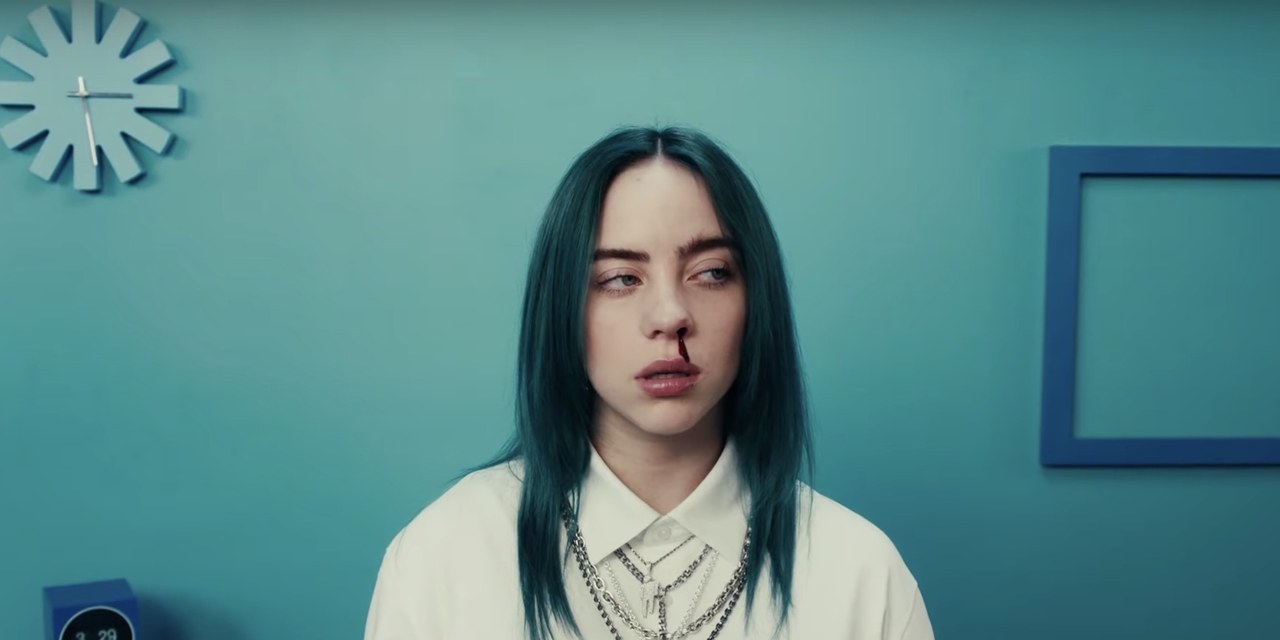
Then there’s her image. Eilish has created a brand largely through Instagram. Snaps of her face and of her wearing baggy, androgynous clothes: deadpan eyes, little to no makeup, nose bleeding in videos, messy blue hair. The stuff of nightmares for parents. You couldn’t get further from pop princess if you tried.

Eilish’s musical creativity and genius comes out in full force on tracks like ‘ilomilo’ which deals with Eilish’s fear of losing another friend. Last year in June, XXXTentacion (a 20 year old American rapper), died in a shooting. Death and the fear of it underpin the album, highlighting Eilish’s unease at the world around her. The darkness that overcame Spears in her late career is laid bare for all to see here, finally getting a voice and, in turn, redefining what pop music can and cannot say.

Confusion, fear, death, loss, hell, hills burning in California… pop isn’t what it used to be. But then again, neither is the world in which it inhabits.

The Disappearance of Madeleine McCann: an addictive, excessive look into one of the world’s biggest mysteries

I realise I’m late to the party on this one.

It’s been a week since Netflix released its eight-part docuseries, ‘The Disappearance of Madeline McCann’. In true-crime time, this may as well be 10 years.

‘Abducted in Plain Sight’, ‘Amanda Knox’, ‘Conversations with a Killer: The Ted Bundy Tapes’ and ‘Making a Murderer’ are just a handful of the true crime series that have exploded in popularity over the past few years, exposing the very worst of humanity and capitalising on the public’s insatiable hunger for the dramatisation of famous real life crime cases.

I watched Netflix’s Amanda Knox when it came out in 2016. Sitting hungover with a friend, we devoured the series and uttered nuanced comments such as ‘no!’, ‘ what the hell?’ and ‘do you think she did it?’ throughout. No answers were provided in the end, and as is the case with the Madeleine McCann documentary, we will probably never receive closure or answers as to what really happened to Madeleine in 2007.

Most jarring, though, was the way the reality of the Amanda Knox case slid into the background as the documentary progressed. As I was taken through the timeline of the murder of Meredith Kercher and Knox’s trial, Knox became a character, painted in a variety of ways as she was at the time, dissected and put back together again in front of my eyes. I could have been watching a BBC drama; the suspense created in these docuseries serves to blur the line between reality and fiction, asking more questions than answering them, and dramatising cases to the point where you forget that these are real people whose lives have been destroyed by speculation, opinions and horrific crimes.

Upon its release, The Disappearance of Madeleine McCann was criticised by The Guardian, who deemed it ‘a moral failure’.

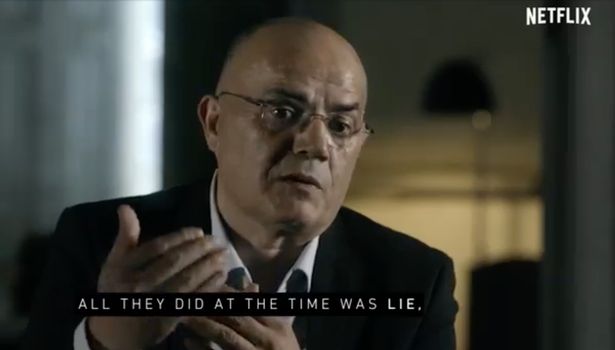
Is this a sign that the tide is starting to turn on Netflix’s ruthless capitalisation on true crime? The series is a harrowingly detailed look at Madeleine’s abduction, spanning eight hour-long episodes, each one picking apart a different disappearance theory (all of which have been explored before the documentary was released in the twelve years since the abduction). Child trafficking, paedophilia, family involvement and an infertile couple stealing Madeleine and running away with her are all explored in depth. The first episode even reenacts the meal the Tapas 7 had the night Madeleine was taken, complete with faceless actors standing up and leaving the table in line with the accounts given by the McCanns and their friends.

The series explores the ruthlessness and savagery of the press, peppering our screens with excerpts from headlines and Tweets from the time. This was the early days of social media; people believed what they read online, in a way that they don’t now. What struck me most was how the crime became larger than itself, spreading like wildfire into the public’s imagination. The private very quickly became public, with the McCanns’ credibility open to comment from anyone who had something to say.

The popular theory of the McCanns as guilty in their daughter’s disappearance is kept alive and well by the ‘proof’ provided by the cadaver and blood dogs, seen in the documentary identifying the smells of a corpse in the McCanns’ apartment and car. Their piercing barks are underpinned by eerie music, leaving the audience on an irresistible cliffhanger, scrambling for the next episode. The last shot of episode 4 was of the dog, tail wagging, barking. Episode 5 starts a few seconds later, not letting the trail go cold, capitalising on the last episode’s cliffhanger and cutting quickly between the dogs and interviews with the police, adding layer upon layer of suspense. The pacing is efficient and clever, taking each theory and blowing it up, then dismantling it as quickly as it was introduced, moving onto the next one so as not to induce boredom.

A day or so after its release, a friend forwarded me a conspiracy theory thread of comments that fuelled the idea that the McCanns are guilty. I flicked through ten pages of comments; more speculation framed as ‘truth’. I’ve been tagged in lots of memes, probably a new one every day, making fun of the McCanns. This is a very well made documentary. Netflix makes good documentaries that people will continue to watch. These are facts. Will Netflix making this documentary help to find Madeleine McCann? Probably not.

Brenda Bly: Teen Detective – a little known gem brought to life by Edinburgh College’s PASS

The year is 1958. A group of peppy teenagers are practicing for their end of year musical, ‘Rocket Girl’. The stage is set, the stakes are high, and everyone is ready for America to be the first country to make it to the moon. 

But, suddenly, two days before opening night, Rocket Girl’s leading lady is knocked unconscious by a sandbag. When she wakes up, she can’t remember a thing.

Cue Brenda Bly (Robyn Husband), Whitney Ellis Private School For Girls teen detective, who rushes to help solve the case of the sandbag and save the show from disaster. 

From this moment on, two hours of pure musical comedy follow. 

A play within a play 

It would be easy to overlook the subtlety of Teen Detective. 

The clichés of American teen storylines – teenage love, catty girl gangs, American optimism and syrupy songs – are intact here, but through the nonsensical and the bizarre, ‘Teen Detective’ creates an upside down world that turns 50s America on its head. 

‘Teen Detective’ is a show with a show in it. The main girl group are rehearsing for ‘Rocket Girl’, a musical about landing on the moon, which fits nicely with 50s America’s anticipation and excitement surrounding spaceflight. 

The sandbag acts as the central plot piece from which the drama evolves, knocking out characters and dismantling the space mission, causing Darcy (played by Lily Pietrzak) to lose her memory. This begs the question: who dropped the bag and why?

Not just another teen play

By focussing on sharp dialogue, writers Kevin Hammonds and Charles Miller take the show from typical teenage outing to a comical and nuanced mystery, blurring the lines between fiction and reality. Blink for a second and you might miss the sharp one-liners that pepper the script.

Robyn Husband convincingly portrays her character’s struggle between working on the sandbag case and spending time with heartthrob boyfriend Buddy, played by Peter Wright; both give  sincere performances. It is easy not to like the jock or popular boy character, but Wright is a likeable Buddy, despite trying to take over Brenda’s case.

The tender and nostalgic lament sang by Miss Van Strander is another great moment, inspired by the character’s past acting days and vanished youth. The lament offers a nice contrast to the speedy, relentless energy of the rest of the show. 

As well as the nuanced acting, the cast really shine in the big dance numbers. Whether they’re running onstage with fake guns in a detective-themed, all-in-black number, or executing classic 50s-style rock ‘n’ roll jive, they are perfectly in time and on cue, making the numbers look slick and full of life.

The weird and wonderful 

Often, the spotlight is given to characters who tend to be overlooked or reduced to sidekick status in many American theatrical pieces. The sassy, raucous JoJo, played by Elgin Adams, is a prime example of this.

Her comic timing was brilliant and her facial expressions were hilarious. It is a skill to be able to evoke laughter from an audience without saying anything at all, and Adams does just that when, in one of Teen Detective’s characteristically bizarre numbers, the cast dance the ‘Oogie Woogie’ (a play on the well-known Boogie Woogie dance of the time) led by Olivia Ejjaouani as a ‘nurse’ who is actually a deluded hospital patient. 

JoJo comes onstage in a wheelchair (after being knocked out by the sandbag of course) looking aghast at the musical madness surrounding her, eyes wide and gesturing wildly with her hands. Its one of those clever and funny self-aware moments in the play, highlighting the sly, wacky humour which the cast accentuates throughout. 

Darcy, the typical American pretty yet ditzy blonde girl, is knocked out first, and her role as lead in the musical is threatened by her inability to remember anything before the sandbag incident. 

Later, the school’s headmistress Vera Van Strander (played by Cat McInally) is blinded by paint splashed by Autumn, an intense and passionate girl-leader played wonderfully by Lois Williams. She teeters around in her office, unable to see and unaware that the man she thinks is her security guard lover Cecil (played by Charlie Marshall) is actually Buddy.

Who dropped the sandbag?

A big highlight is the show’s use of suspense. The mystery of the show – who is dropping the sandbag – keeps the audience interested, adding structure and suspense to what could’ve been a messy, lose plot. Even more clever is the fact that the culprit’s nationality ties in nicely with 50s US and Soviet tensions. 

The anxiety of the era creeps through via the unveiling of the perpetrator, adding another layer of awareness and complexity to the musical. Brenda Bly goes from character to character, analysing their whereabouts on the night of the original sandbag attack, questioning their every move. 

At the end of the show, I left the theatre with one question myself: why didn’t I know about Brenda Bly before tonight? 

PASS will be performing Cabaret at Edinburgh College’s Granton Campus in Edinburgh, 1-2 May 2019. Details to follow here: https://www.facebook.com/PASS-Performing-Arts-Studio-Scotland-Musical-Theatre-1126156307559870/

Photography by Zelie Jennings.

Let’s talk about HBO’s Sharp Objects

*SPOILER ALERT*

I don’t know what I watched and I don’t know whether I liked it.

Let me start by saying I thought Amy Adams was the lead in ‘Confessions of a Shopaholic’. I was wrong. Very wrong. That was Isla Fisher. I was just super impressed at Amy Adams’ supposed acting range.

I binge watched Sharp Objects over the course of 2 days. From the dramatic opening to the chilling ending, Amy Adams draws you into a strange, not-real-but-real-enough worlds that is both disturbing and mesmerising. The story goes like this: Camille is a reporter who isn’t doing so well at work.   She returns to Wind Gap (a fictional American mid-west town) upon the request of her mentor and boss to uncover the secrets of her hometown when a girl is murdered there, and everything goes horribly wrong.

I spent hours after finishing the series reading articles, trying to make sense of what I’d just watched (this one is my favourite: https://www.vulture.com/2018/08/sharp-objects-finale-ending-explained.html)

Primarily, though, the series made me think about female violence, and whether or not we provide enough space for it in society.

Camille returns to Wind Gap and every interaction with her mother Adora is painful. Her sister Amma is weird too, swinging between doting on Camille and dismissing her. Then there’s the issue of Camille’s dead sister Marian, who died of a mysterious illness when Camille was a teenager herself.

When it is finally revealed that Amma was the killer of the girl in Wind Gap, I found myself asking ‘How did I not realise this?’. I’m sure lots of people would say it was obvious from the start, but I didn’t even consider it. I was too busy examining the male characters, wondering why the hell this series wasn’t developing them more or giving them a backstory or a motive for killing a teenage girl.

Turns out the character that was the killer all along was the rollerblading teenager; the innocent yet sexualised Amma whose sociopathic tendencies I, and the rest of Wind Gap overlooked. The evidence was laid out in plain sight: Amma is manipulative, destructive, calculating, sly and vicious. She knows how to manipulate Camille even though Camille is 15 years older than her.

She kills piglets for fun.

Then there’s Adora, Camille and Amma’s mother. Oh, Adora. Her evil is laid bare for all to see; poison drips from her every word. She is obviously callous, the kind of character that makes me think of Gossip Girl’s Lily van der Woodsen gone wrong, a socialite mixed with something far more sinister. I got undertones of Coraline, when the mother’s web tries to suck her daughter in and trap her. Everyone is trapped in Adora’s web, even her husband, and her two daughters pay the heavy price of her Munchausen by Proxy. Her name is both ironic and truthful: she adores Amma, who is an anagram of Mama, but smothers her until she becomes a sociopath with an appetite for violence.

I twigged quite early that Adora could be the culprit of the murder, and by the end I thought if it isn’t a man, it must be her.

Still, even when Amma’s crimes are brought to light in their full gruesome brutality, (the teeth of a dead girl paving a dollhouse floor is a stroke of genius, but not quite as haunting as a small doll figurine perching on the dollhouse windowsill, in the exact position Camille finds the dead girl in in episode 1) I couldn’t quite believe that she was capable of murder.

Society teaches us that women aren’t scary. Men are the rapists, killers and violators. What I found interesting in this series was that the crime disipated into the background of the action, and what is left is a vivid portrayal of a fractured and disturbed family that shows just how suffocating and damaging family life can be.

Camille wears her scars visibly across her body; her arms are all jagged edges, her thighs are slashed and her stomach bares the marks of her inner torture brought on by her family traumas. She is almost disfigured by her scars. They bare a central metaphor of the series: the women are severely damaged inside, but their outer appearances – Camille in full clothing looks completely normal and has a beautiful face; Amma looks innocent and childlike – make everyone overlook the damage they are capable of, reducing them to simplified, two-dimensional versions of themselves.

Camille is called a slut by the detective she sleeps with after he finds her in bed with another man, whilst Amma is never looked into as a suspect for the murder of a girl she reveals bit by bit she spent a lot of time with.

As the credits role, you catch a second-long glimpse of a girl in a white dress looking out from the woods. The murderer. She was there all along, but we dismissed her.

Design a site like this with WordPress.com
Get started